Continuous Professional Development (CPD) for Teachers in KVS
Continuous Professional Development (CPD) in Kendriya Vidyalaya Sangathan (KVS) refers to structured training programs aimed at enhancing teachers’ professional knowledge, pedagogical skills, and personal competencies. These programs are designed to meet evolving educational demands and align with the objectives of NEP 2020.
Objectives of CPD in KVS
- Upgrade teachers’ knowledge and skills to meet contemporary teaching-learning requirements.
- Implement NEP 2020 reforms such as competency-based and experiential learning.
- Enhance ICT integration including digital boards, AI, and coding.
- Develop 21st-century skills like critical thinking, creativity, collaboration, and communication.
- Promote personal growth through leadership, communication, and emotional intelligence.
- Improve student learning outcomes through effective pedagogy and assessment practices.
Key Training Areas
- Pedagogy Workshops: Innovative teaching methodologies, lesson planning, and differentiated instruction.
- Classroom Management Training: Effective classroom control, behavior management, and conflict resolution techniques.
- Technology Integration Workshops: Enhancing digital literacy and integrating technology into classroom teaching.
- Assessment and Feedback Training: Designing assessments, providing constructive feedback, and using data for improvement.
- Special Education & Inclusive Teaching: Strategies for supporting diverse learners and creating inclusive classrooms.
- Cultural Competency Training: Promoting diversity, understanding cultural differences, and inclusive teaching practices.
- Social and Emotional Learning (SEL): Developing students’ emotional well-being, resilience, and positive classroom culture.
Key Features of CPD Programs
- Structured Training Modules: Developed by KVS HQ in collaboration with NCERT, CBSE, NVS, and other institutions.
- Blended Learning Approach: Combination of offline workshops, online platforms, and self-paced learning.
- Competency-Based Training: Focus on practical classroom application.
- Subject-Specific Programs: Customized for PGT, TGT, PRT, and special educators.
- Assessment & Feedback: Evaluation through assignments, quizzes, and projects.
Training Platforms Used by KVS
- DIKSHA Portal: Online courses and digital resources.
- NISHTHA Modules: Capacity-building programs aligned with NEP 2020.
- KVS Regional Institutes: Hands-on training and workshops.
- Webinars & Virtual Classes: For timely dissemination of knowledge.
Recent Focus Areas
- Integration of Artificial Intelligence, Robotics, and Coding.
- Competency-based assessment and question paper design.
- Inclusive education and support for special needs.
- Experiential and activity-based learning approaches.
- Digital literacy and cybersecurity awareness.
Impact of CPD on Teachers
- Improved lesson planning and student engagement.
- Enhanced confidence in using technology.
- Better understanding of competency-based assessment.
- Development of resource-rich classrooms.
- Growth of teacher leadership and mentoring skills.
Annual CPD Cycle in KVS
- Identification of training needs through feedback and performance analysis.
- Preparation of annual training calendar by KVS HQ and regional offices.
- Implementation through online and offline training programs.
- Assessment through quizzes, assignments, and demonstration lessons.
- Follow-up mentoring to ensure effective classroom implementation.
Overall, CPD in KVS plays a crucial role in strengthening teachers’ competencies and ensuring quality education aligned with national educational priorities.
Continuous Professional Development (CPD) Workshops Conducted in PM SHRI KV Narayanpur (Session 2026-27)
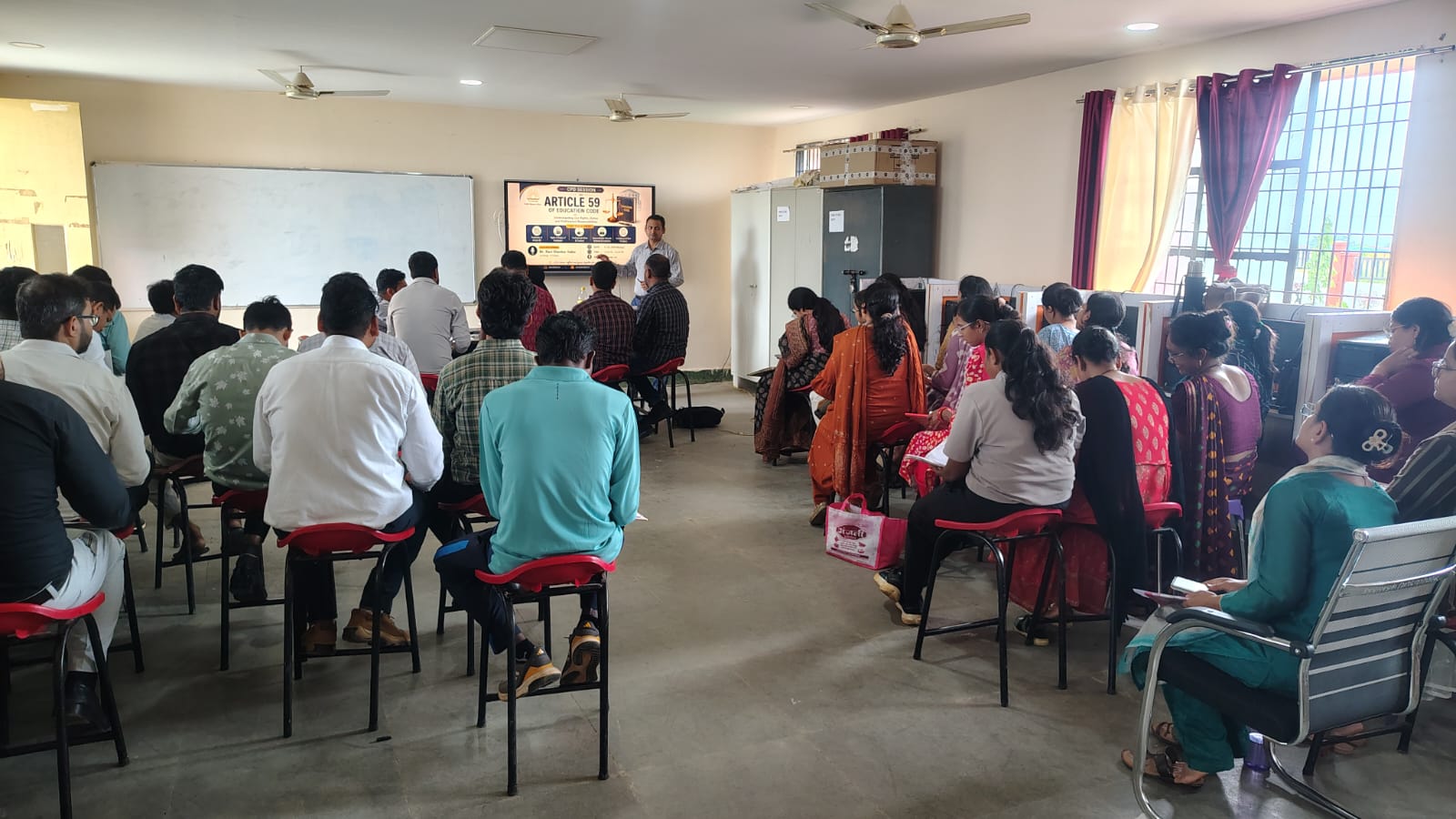
Training Programme on Article 59 of the Education Code
Topic: Article 59 of the Education Code
Date: 31 August 2026
Resource Person: Mr. Ravi Shankar Yadav, I/C Principal
A training programme on Article 59 of the Education Code was successfully organised on 31 August 2026 in the Computer Lab of the Vidyalaya. The session was conducted by Mr. Ravi Shankar Yadav, I/C Principal.
Objectives of the Training
- To familiarise participants with the provisions of Article 59 of the Education Code.
- To develop an understanding of the rules, procedures and institutional responsibilities related to Article 59.
- To clarify the practical application of the provisions and their implications for school administration.
- To create awareness regarding effective compliance with the rules and proper record-keeping and administrative procedures.
Key Highlights of the Session
Mr. Ravi Shankar Yadav highlighted the key provisions of Article 59 of the Education Code and explained their practical significance. The session focused on understanding the relevant rules in the context of school administration and day-to-day functioning.
The training covered the administrative aspects, relevant procedures and the importance of proper compliance with the provisions of Article 59. Participants were apprised of the necessary precautions for developing a clear understanding of the rules and implementing them effectively in the workplace.
Participation and Interaction
Teaching and non-teaching staff actively participated in the programme. Participants raised questions regarding the provisions of Article 59, their practical application and various aspects related to school administration. Their queries were addressed through interactive discussion.
Outcome of the Training
- Understanding of the provisions of Article 59 of the Education Code was enhanced.
- Awareness of the related administrative procedures and responsibilities increased.
- Clarity regarding the practical application of the rules and the importance of compliance was achieved.
- Staff members were encouraged to ensure effective compliance with the rules in school functioning.
Conclusion
The training programme was highly useful and informative for the participants. It strengthened their understanding of the provisions of Article 59 of the Education Code and highlighted the importance of effective compliance with the rules and proper procedures in school administration.
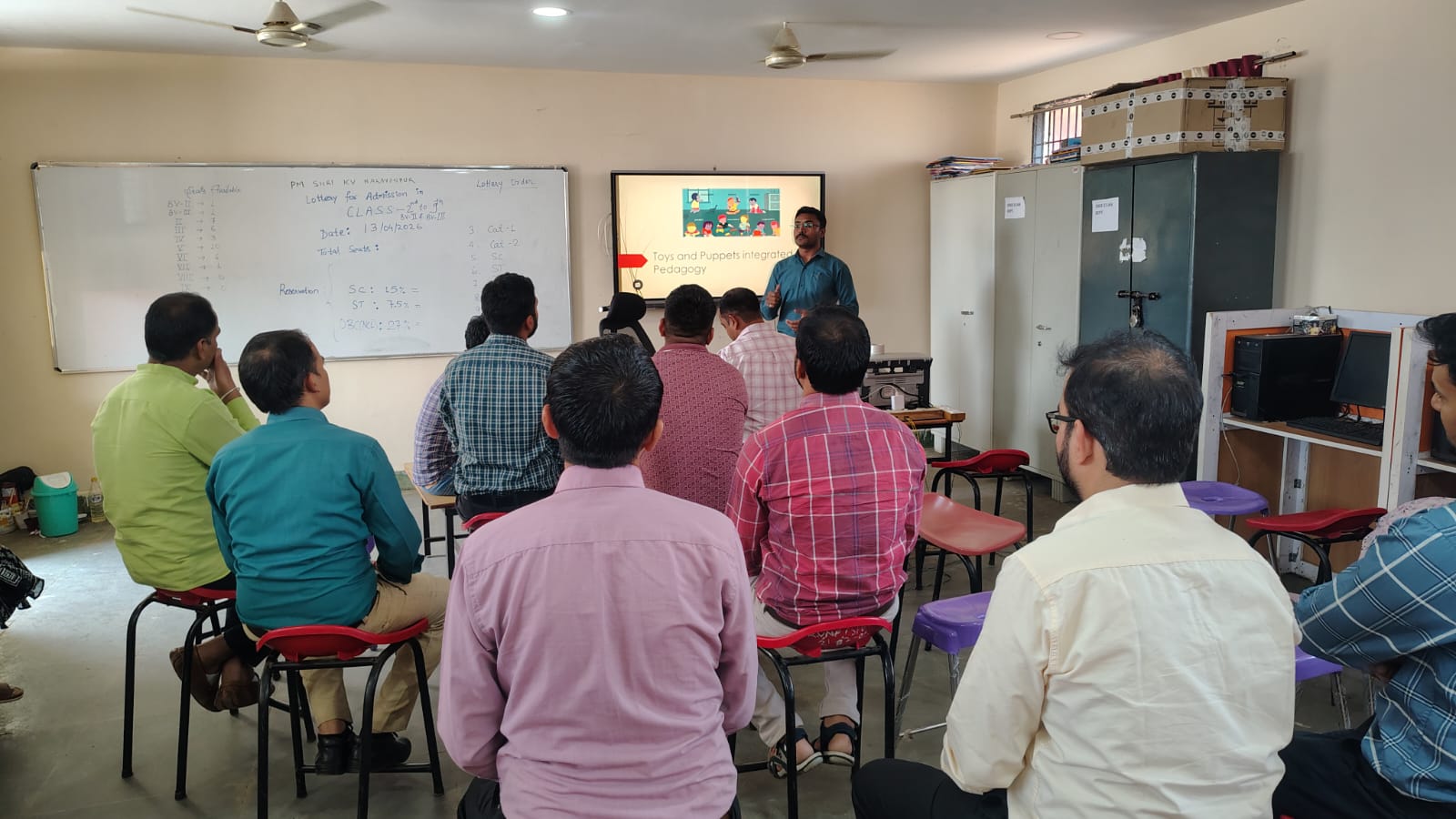
CPD Workshop on Toy-Based Pedagogy
Topic: Toy-Based Pedagogy
A Continuous Professional Development (CPD) workshop on the topic “Toy-Based Pedagogy” was successfully conducted on 29th April 2026 in the Computer Lab of the Vidyalaya. The session was facilitated by Mr. Ashish Bhalerao, PRT.
Objectives of the Workshop
- To familiarize teachers with the concept and significance of Toy-Based Pedagogy in school education.
- To promote joyful, experiential, and activity-based learning among students.
- To enable teachers to integrate toys and play materials effectively into classroom teaching.
- To align classroom practices with the recommendations of the National Education Policy (NEP) 2020.
Highlights of the Session
Mr. Ashish Bhalerao highlighted the importance of Toy-Based Pedagogy in making learning engaging, interactive, and enjoyable for students. The session emphasized the role of toys in enhancing conceptual understanding, creativity, critical thinking, and problem-solving abilities among learners.
The resource person demonstrated how locally available and indigenous toys can be effectively integrated into classroom teaching to facilitate experiential learning. The workshop also focused on the use of play-based strategies for improving student participation and fostering holistic development.
Participation and Interaction
The workshop witnessed enthusiastic participation from the teaching staff. Participants actively engaged in discussions and shared innovative ideas on incorporating toy-based activities into different subject areas. The interactive nature of the session encouraged teachers to explore creative teaching-learning practices.
Outcome of the Workshop
- Enhanced understanding of the principles and benefits of Toy-Based Pedagogy.
- Improved awareness regarding experiential and play-based learning strategies.
- Increased motivation among teachers to integrate toys and activities into classroom teaching.
- Encouragement to adopt innovative and learner-centric pedagogical practices.
Conclusion
The CPD workshop proved to be highly informative and beneficial for all participants. It reinforced the importance of joyful and experiential learning and encouraged teachers to adopt Toy-Based Pedagogy as an effective approach for enhancing student engagement and learning outcomes.
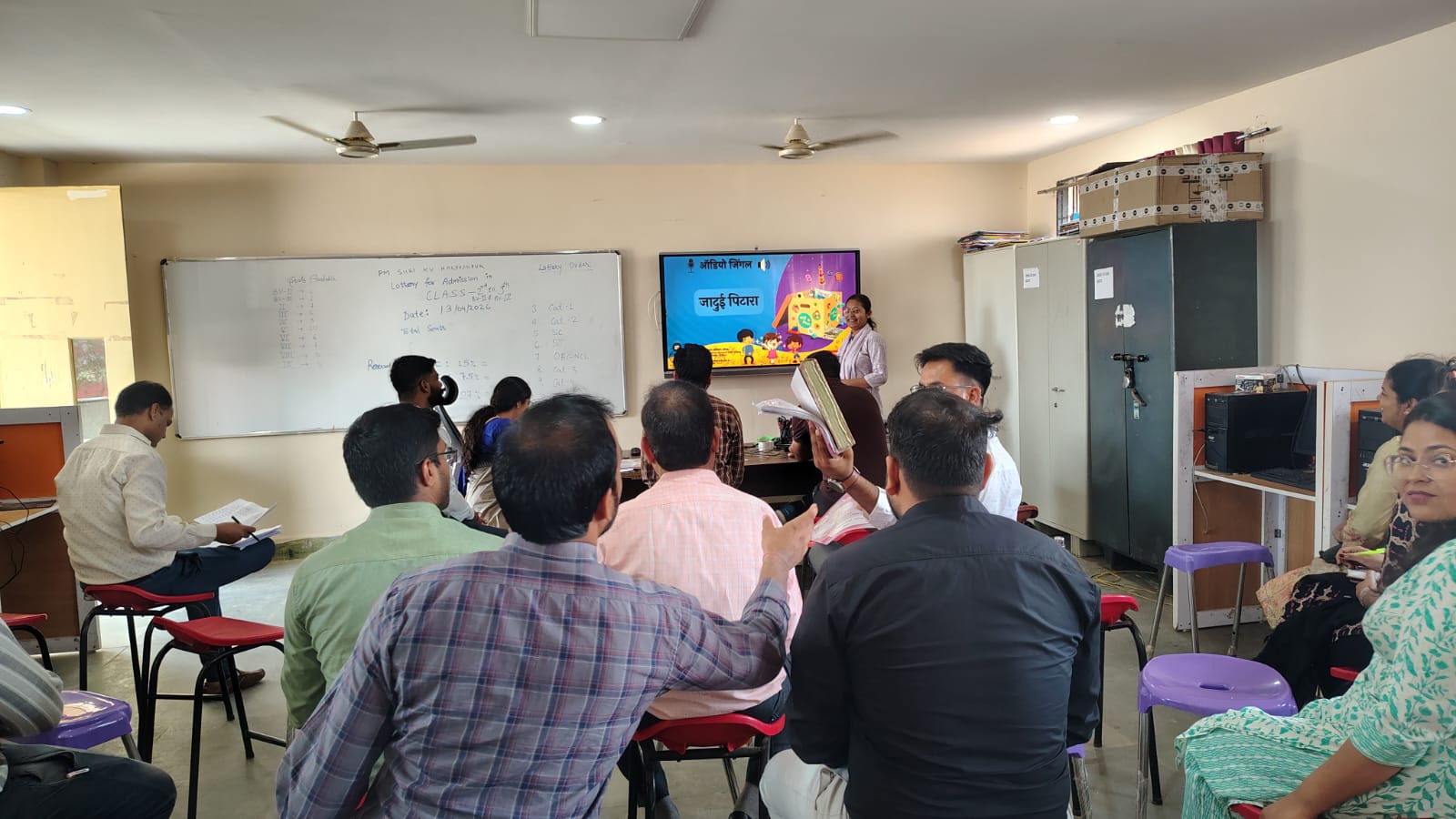
CPD Workshop on Jadui Pitara
Topic: Jadui Pitara
A Continuous Professional Development (CPD) workshop on the topic “Jadui Pitara” was successfully conducted on 28th April 2026 in the Computer Lab of the Vidyalaya. The session was facilitated by Ms. Karishma Shukla, PRT.
Objectives of the Workshop
- To familiarize teachers with the concept and significance of Jadui Pitara as envisaged under the National Education Policy (NEP) 2020.
- To promote joyful, play-based, and activity-oriented learning in the Foundational Stage.
- To enable teachers to effectively utilize Jadui Pitara resources in classroom teaching.
- To encourage the adoption of innovative and child-centric pedagogical practices.
Highlights of the Session
Ms. Karishma Shukla highlighted the importance of Jadui Pitara as an innovative play-based learning resource developed by NCERT for the Foundational Stage. The session emphasized the role of stories, toys, games, puzzles, puppets, and activity-based materials in making learning joyful, engaging, and meaningful for young learners.
The resource person demonstrated various components of Jadui Pitara and explained how these resources can be integrated into classroom practices to promote experiential learning, creativity, communication skills, and holistic development among children. The workshop also emphasized the alignment of Jadui Pitara with the objectives of NEP 2020 and NIPUN Bharat Mission.
Participation and Interaction
The workshop witnessed enthusiastic participation from the teaching staff. Participants actively engaged in discussions and shared ideas regarding the effective use of Jadui Pitara resources in classroom transactions. Demonstrations and interactive activities made the session highly engaging and informative.
Outcome of the Workshop
- Enhanced understanding of the objectives and components of Jadui Pitara.
- Improved awareness regarding play-based and experiential learning approaches.
- Strengthened capacity of teachers to integrate Jadui Pitara resources into classroom teaching.
- Encouragement to adopt joyful and child-centric pedagogical practices.
Conclusion
The CPD workshop proved to be highly informative and beneficial for all participants. It reinforced the importance of play-based and experiential learning in the Foundational Stage and motivated teachers to effectively utilize Jadui Pitara resources to create engaging and enriching learning experiences for students.
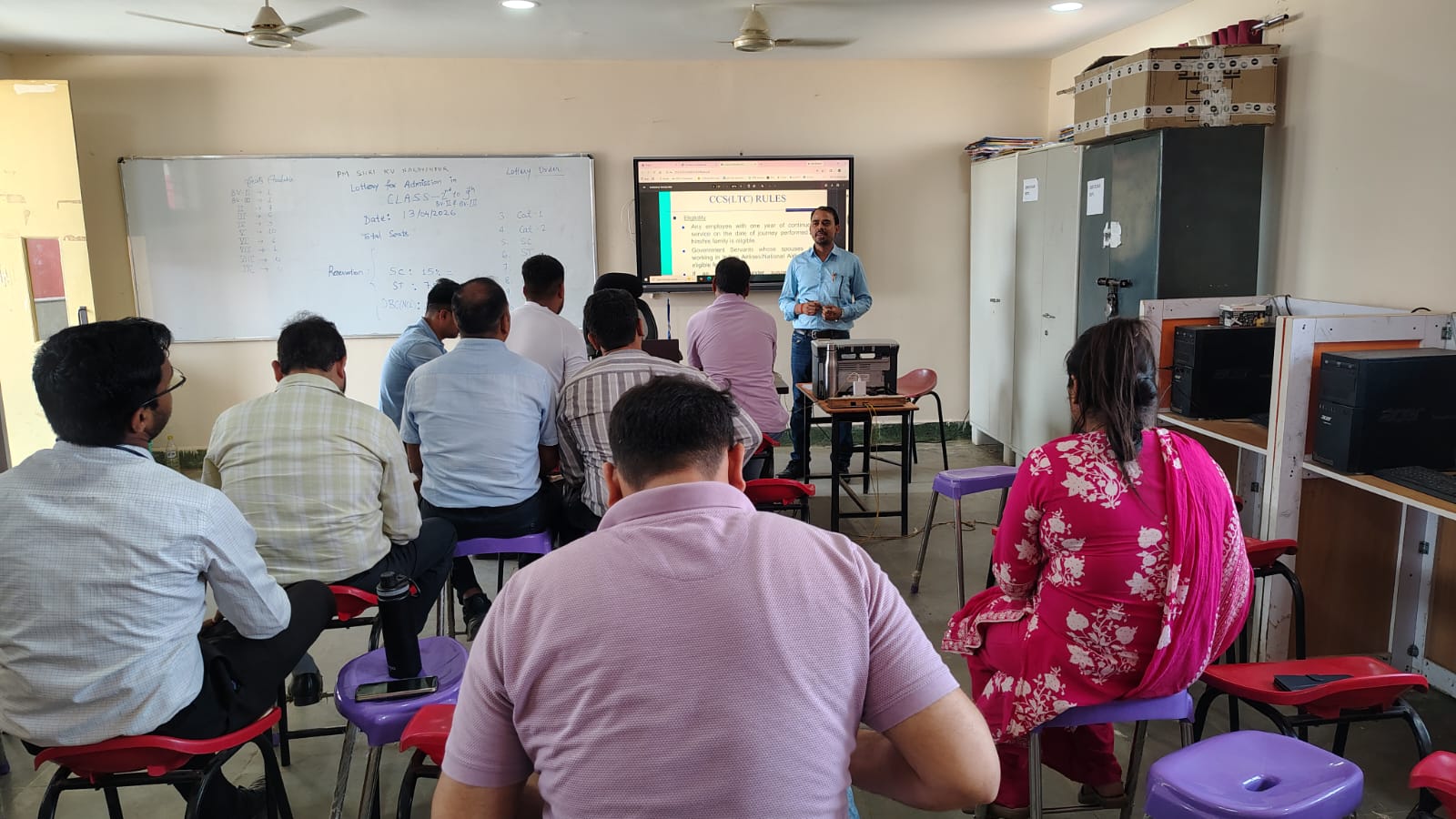
CPD Workshop on Leave Travel Concession (LTC) Rules
Topic: Leave Travel Concession (LTC) Rules
A Continuous Professional Development (CPD) workshop on the topic “Leave Travel Concession (LTC) Rules” was successfully conducted on 29th April 2026 in the Computer Lab of the Vidyalaya. The session was facilitated by Mr. Mahesh Dewangan, TGT Mathematics.
Objectives of the Workshop
- To familiarize staff members with the provisions and guidelines related to Leave Travel Concession (LTC).
- To create awareness regarding eligibility conditions, entitlements, and admissibility under LTC.
- To provide clarity on the procedures for availing LTC and submission of claims.
- To enable employees to comply with the rules and avoid discrepancies while claiming LTC benefits.
Highlights of the Session
Mr. Mahesh Dewangan elaborated on the various provisions governing Leave Travel Concession (LTC) for Central Government employees. The session covered important aspects such as eligibility criteria, types of LTC, home town and all-India LTC, block years, and admissible travel entitlements.
The resource person also explained the procedures for applying for LTC, booking of tickets through authorized agencies, submission of LTC claims, and the documentation required for reimbursement. Emphasis was laid on adherence to Government guidelines and timely submission of claims to ensure smooth processing.
Participation and Interaction
The workshop witnessed active participation from the teaching and non-teaching staff. Participants raised various queries related to LTC eligibility, claim procedures, and recent amendments in LTC rules. The interactive discussion helped clarify doubts and enhanced participants’ understanding of the provisions.
Outcome of the Workshop
- Enhanced understanding of the provisions and procedures related to LTC.
- Improved awareness regarding eligibility conditions and admissible entitlements.
- Increased clarity on the documentation and claim submission process.
- Encouragement to adhere to Government rules while availing LTC benefits.
Conclusion
The CPD workshop proved to be highly informative and beneficial for all participants. It provided valuable insights into the various aspects of LTC Rules and enabled staff members to understand and avail LTC facilities in accordance with Government norms and procedures.
CPD Workshop on Teamwork and Leadership Skills
Topic: Teamwork and Leadership Skills
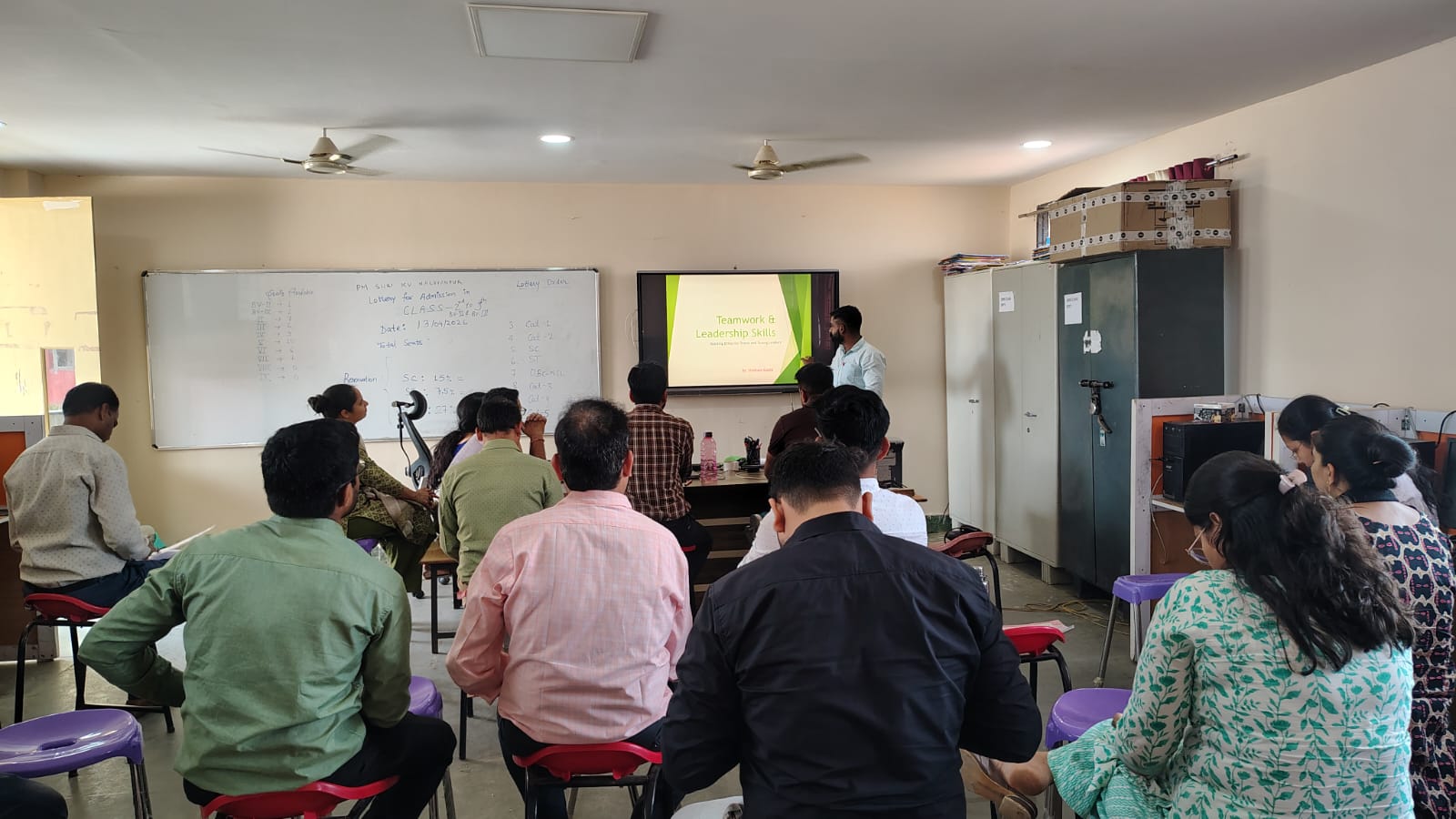
A Continuous Professional Development (CPD) workshop on the topic “Teamwork and Leadership Skills” was successfully conducted on 28th April 2026 in the Computer Lab of the Vidyalaya. The session was facilitated by Mr. Shubham Gupta, PRT.
Objectives of the Workshop
- To develop an understanding of the importance of teamwork and leadership in educational institutions.
- To enhance collaborative skills among teachers for effective functioning within the school environment.
- To strengthen leadership qualities necessary for professional growth and institutional development.
- To promote a positive and cooperative work culture in the Vidyalaya.
Highlights of the Session
Mr. Shubham Gupta emphasized the significance of teamwork and effective leadership in achieving organizational goals and improving the overall functioning of the school. The session highlighted the essential characteristics of effective leaders, including communication, decision-making, problem-solving, empathy, and accountability.
The resource person discussed various strategies for building strong teams, fostering collaboration, resolving conflicts, and creating a supportive work environment. The importance of shared responsibility, mutual respect, and collective efforts in achieving educational objectives was also emphasized.
Participation and Interaction
The workshop witnessed enthusiastic participation from the teaching staff. Interactive discussions, group activities, and experience-sharing sessions made the programme engaging and insightful. Participants actively reflected on their leadership roles and explored ways to strengthen teamwork within the Vidyalaya.
Outcome of the Workshop
- Enhanced understanding of the principles of teamwork and leadership.
- Improved collaborative and interpersonal skills among teachers.
- Increased awareness regarding effective communication and conflict resolution strategies.
- Encouragement to foster a positive, cooperative, and productive work environment.
Conclusion
The CPD workshop proved to be highly informative and beneficial for all participants. It reinforced the importance of teamwork and leadership in achieving institutional goals and motivated teachers to adopt collaborative practices for the overall development of the Vidyalaya.
CPD Workshop on Disaster Management and School Safety
Topic: Disaster Management and School Safety
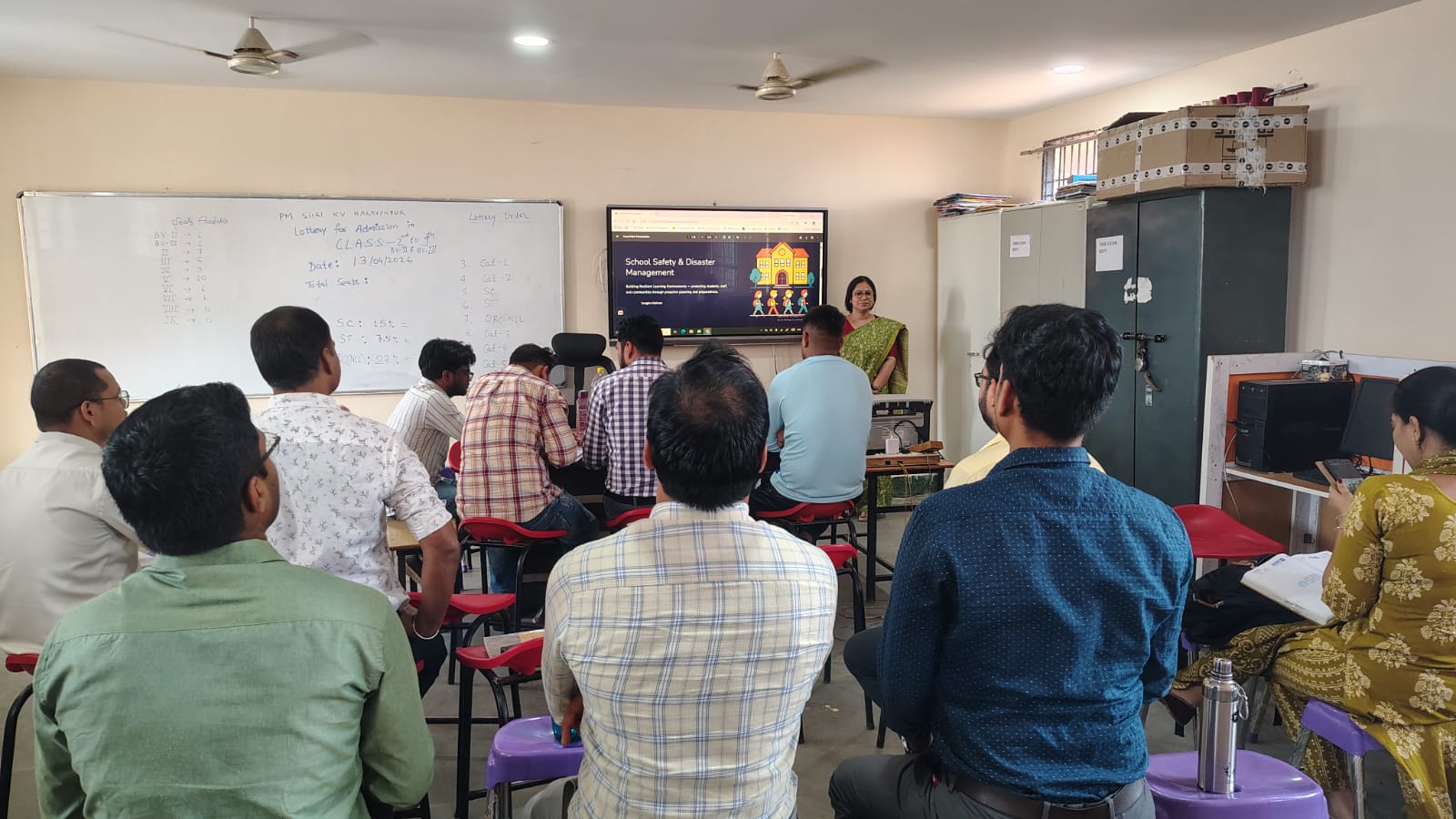
A Continuous Professional Development (CPD) workshop on the topic “Disaster Management and School Safety” was successfully conducted on 23rd April 2026 in the Computer Lab of the Vidyalaya. The session was facilitated by Mrs. Sangita Mahata, PGT Geography.
Objectives of the Workshop
- To create awareness among teachers regarding various natural and human-induced disasters.
- To familiarize staff members with disaster preparedness and response mechanisms in schools.
- To develop an understanding of school safety measures and emergency protocols.
- To promote a culture of safety, preparedness, and resilience within the school community.
Highlights of the Session
Mrs. Sangita Mahata highlighted the importance of disaster management in educational institutions and emphasized the need for preparedness to minimize risks during emergencies. The session covered various types of disasters such as earthquakes, floods, fires, cyclones, and other emergencies that may affect school functioning.
The resource person discussed essential aspects of school safety, including evacuation procedures, emergency response plans, first aid measures, and the roles and responsibilities of teachers during disasters. Emphasis was also laid on conducting mock drills, maintaining emergency equipment, and ensuring a safe learning environment for all students.
Participation and Interaction
The workshop witnessed active participation from the teaching staff. Interactive discussions and experience-sharing sessions enabled participants to discuss various disaster scenarios and appropriate response strategies. Teachers actively engaged in deliberations on strengthening safety measures within the Vidyalaya.
Outcome of the Workshop
- Enhanced awareness regarding disaster preparedness and risk reduction strategies.
- Improved understanding of school safety protocols and emergency response procedures.
- Strengthened capacity of teachers to respond effectively during emergencies.
- Encouragement to promote a safe, secure, and disaster-resilient school environment.
Conclusion
The CPD workshop proved to be highly informative and beneficial for all participants. It reinforced the importance of disaster preparedness and school safety in ensuring the well-being of students and staff members and encouraged the adoption of proactive safety measures in the Vidyalaya.
Topic: Implementation of National Education Policy (NEP) 2020
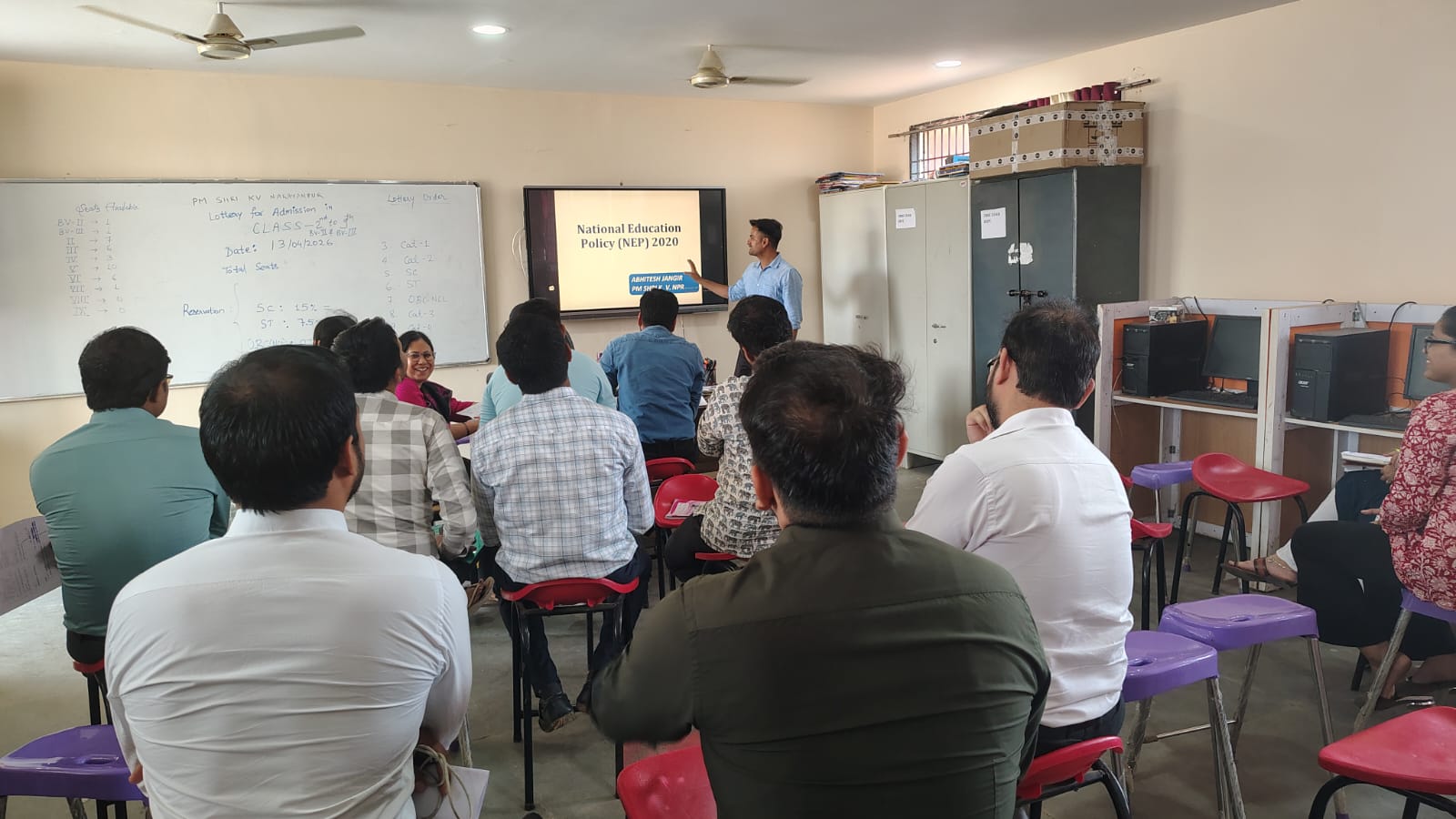
A Continuous Professional Development (CPD) workshop on the topic “National Education Policy (NEP) 2020” was successfully conducted on 27th April 2026 in the Computer Lab of the Vidyalaya. The session was facilitated by Mr. Abhitesh Jangir, PRT.
Objectives of the Workshop
- To familiarize teachers with the key provisions and vision of NEP 2020.
- To understand the shift from rote learning to competency-based education.
- To explore innovative pedagogical practices aligned with NEP 2020.
- To promote holistic and multidisciplinary learning approaches.
Highlights of the Session
Mr. Abhitesh Jangir elaborated on the major reforms introduced under NEP 2020, emphasizing the importance of experiential learning, critical thinking, and skill-based education. The session highlighted the transformation in the school education structure (5+3+3+4), integration of technology in teaching, and the focus on foundational literacy and numeracy.
The workshop also covered assessment reforms, including the shift towards formative and competency-based evaluations. Teachers were encouraged to adopt learner-centric methodologies and integrate digital tools effectively in classroom teaching.
Participation and Interaction
The workshop witnessed active participation from the teaching staff. Interactive discussions, question-answer sessions, and sharing of best practices made the session engaging and insightful. Participants expressed their views on implementing NEP 2020 in the classroom context and discussed practical challenges and solutions.
Outcome of the Workshop
- Enhanced understanding of NEP 2020 among teachers.
- Increased awareness of innovative teaching strategies.
- Encouragement for adopting technology-integrated learning.
- Motivation to implement competency-based education practices.
Conclusion
The CPD workshop proved to be highly informative and beneficial for all participants. It provided valuable insights into the implementation of NEP 2020 and reinforced the need for continuous professional development among teachers to meet the evolving demands of education.
CPD Workshop on 21st Century Skills
Topic: 21st Century Skills
A Continuous Professional Development (CPD) workshop on the topic “21st Century Skills” was successfully conducted on 27th April 2026 in the Computer Lab of the Vidyalaya. The session was facilitated by Mrs. Chandni, PRT.
Objectives of the Workshop
- To familiarize teachers with the concept and importance of 21st Century Skills in education.
- To develop an understanding of critical thinking, creativity, collaboration, and communication skills.
- To promote innovative and learner-centric pedagogical practices.
- To equip teachers with strategies for integrating these skills into classroom teaching.
Highlights of the Session
Mrs. Chandni elaborated on the significance of 21st Century Skills in preparing students for future challenges and opportunities. The session emphasized the four essential competencies, commonly known as the 4Cs – Critical Thinking, Creativity, Collaboration, and Communication.
The resource person highlighted the importance of integrating digital literacy, problem-solving, innovation, and life skills into everyday classroom practices. Various examples and classroom strategies were discussed to enable teachers to foster these skills among students.
Participation and Interaction
The workshop witnessed enthusiastic participation from all teaching staff. Interactive discussions, group activities, and experience-sharing sessions made the programme engaging and insightful. Participants actively shared their ideas and explored practical approaches for implementing 21st Century Skills in classroom settings.
Outcome of the Workshop
- Enhanced understanding of the importance of 21st Century Skills in education.
- Increased awareness regarding learner-centric and innovative teaching practices.
- Improved understanding of integrating critical thinking and creativity in classroom activities.
- Motivation among teachers to adopt collaborative and technology-enabled pedagogies.
Conclusion
The CPD workshop proved to be highly informative and beneficial for all participants. It reinforced the importance of equipping students with essential skills required for the 21st century and encouraged teachers to adopt innovative instructional practices to enhance student learning outcomes.
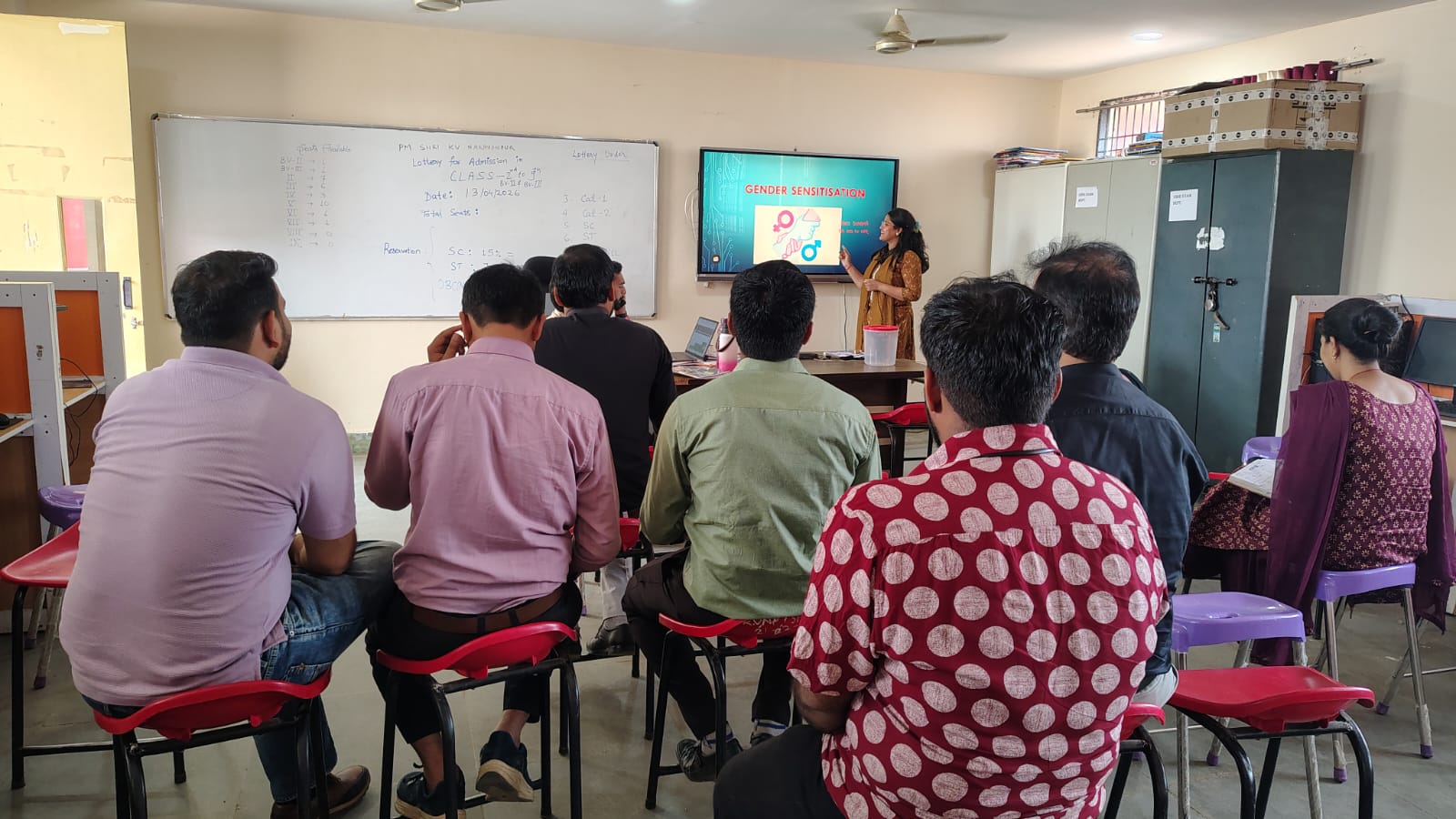
CPD Workshop on Gender Sensitization and Legal Awareness
Topic: Gender Sensitization & Legal Awareness
A Continuous Professional Development (CPD) workshop on the topic “Gender Sensitization and Legal Awareness” was successfully conducted on 25th April 2026 in the Computer Lab of the Vidyalaya. The session was facilitated by Ms. Jyoti Sharma, PRT.
Objectives of the Workshop
- To create awareness among teachers regarding gender equality and sensitivity in educational settings.
- To promote an inclusive, respectful, and safe environment for all students and staff members.
- To familiarize participants with legal provisions related to gender issues and protection of rights.
- To encourage gender-responsive practices and ethical behaviour in the school environment.
Highlights of the Session
Ms. Jyoti Sharma highlighted the importance of gender sensitization in fostering an inclusive and equitable educational environment. The session emphasized the need to eliminate gender stereotypes, promote mutual respect, and ensure equal opportunities for all learners irrespective of gender.
The resource person discussed various legal provisions and policies related to gender equality, women’s rights, child protection, and workplace safety. The session also focused on the responsibilities of teachers in promoting gender-sensitive practices and preventing discrimination, harassment, and bias within the school environment.
Participation and Interaction
The workshop witnessed enthusiastic participation from the teaching staff. Interactive discussions, case studies, and experience-sharing sessions enabled participants to reflect on gender-related issues and explore strategies for creating a more inclusive and supportive learning environment.
Outcome of the Workshop
- Enhanced understanding of gender sensitization and its significance in educational institutions.
- Improved awareness regarding legal provisions related to gender equality and protection of rights.
- Strengthened commitment towards promoting an inclusive, respectful, and safe school environment.
- Encouragement to adopt gender-sensitive practices in classroom teaching and school activities.
Conclusion
The CPD workshop proved to be highly informative and beneficial for all participants. It reinforced the importance of gender equality, legal awareness, and ethical conduct in creating a safe, inclusive, and supportive educational environment for all stakeholders.
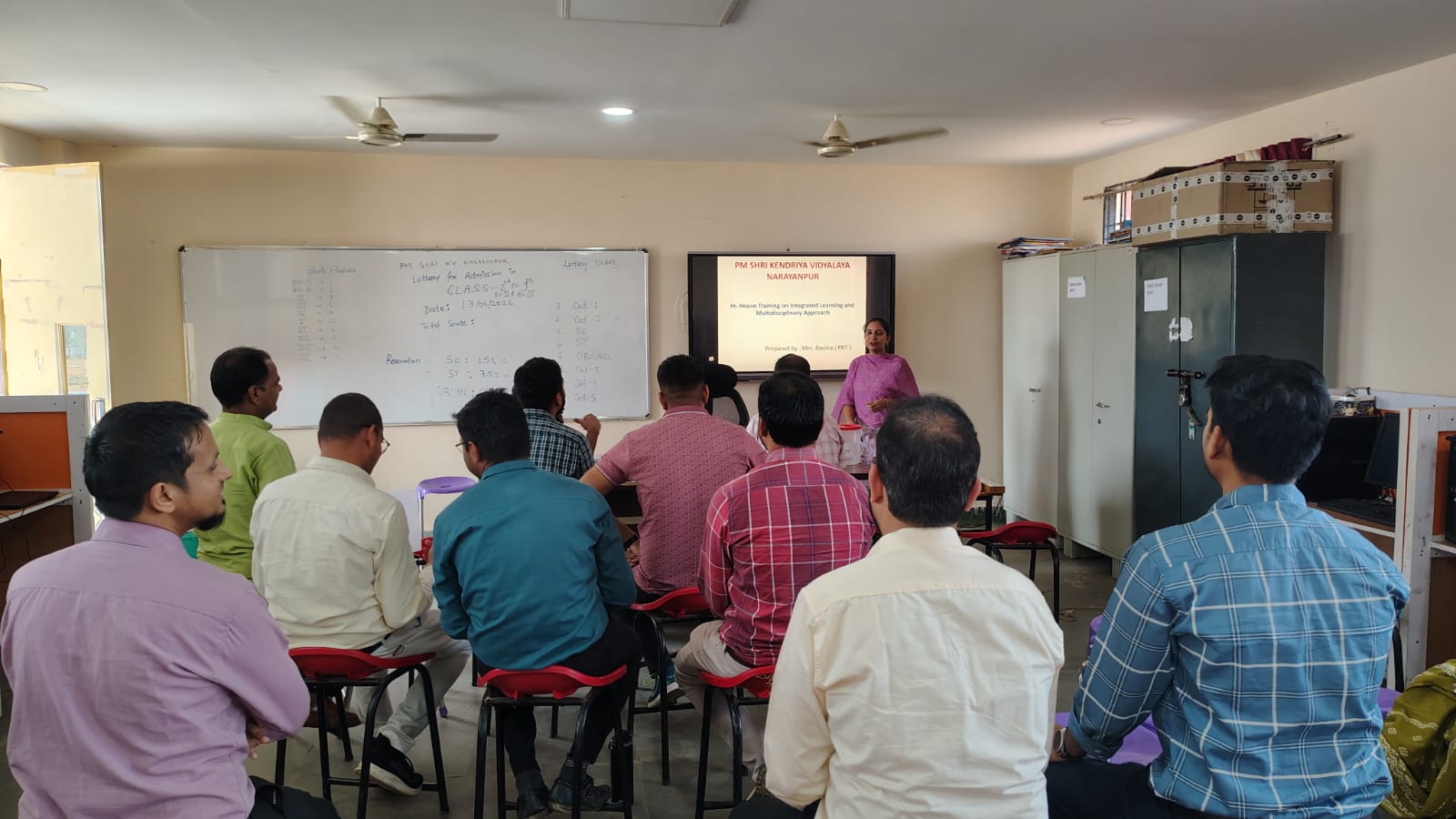
CPD Workshop on Integrated Learning and Multidisciplinary Approach
Topic: Integrated Learning & Multidisciplinary Approach
A Continuous Professional Development (CPD) workshop on the topic “Integrated Learning and Multidisciplinary Approach” was successfully conducted on 24th April 2026 in the Computer Lab of the Vidyalaya. The session was facilitated by Mrs. Ravina, PRT.
Objectives of the Workshop
- To familiarize teachers with the concept and significance of integrated and multidisciplinary learning as envisaged in NEP 2020.
- To promote holistic and interconnected learning experiences for students.
- To enable teachers to design lessons that integrate concepts across different subjects.
- To encourage innovative, experiential, and learner-centric pedagogical practices.
Highlights of the Session
Mrs. Ravina elaborated on the importance of integrated learning and multidisciplinary approaches in enhancing students’ understanding and application of knowledge in real-life situations. The session emphasized the need to break traditional subject boundaries and promote holistic learning experiences.
The resource person discussed various strategies for integrating different subjects, including project-based learning, thematic teaching, experiential learning, and collaborative activities. The workshop highlighted how multidisciplinary learning can foster creativity, critical thinking, problem-solving skills, and deeper conceptual understanding among students.
Participation and Interaction
The workshop witnessed enthusiastic participation from the teaching staff. Participants actively engaged in discussions and shared innovative ideas for integrating concepts across various subjects. The interactive session provided valuable insights into designing meaningful and engaging learning experiences for students.
Outcome of the Workshop
- Enhanced understanding of integrated and multidisciplinary approaches to teaching-learning.
- Improved awareness regarding the implementation of NEP 2020 recommendations in classroom practices.
- Strengthened capacity of teachers to design interdisciplinary and experiential learning activities.
- Encouragement to adopt innovative and holistic pedagogical practices.
Conclusion
The CPD workshop proved to be highly informative and beneficial for all participants. It reinforced the importance of integrated and multidisciplinary learning in fostering holistic development among students and motivated teachers to adopt learner-centric and interdisciplinary teaching practices in alignment with the vision of NEP 2020.
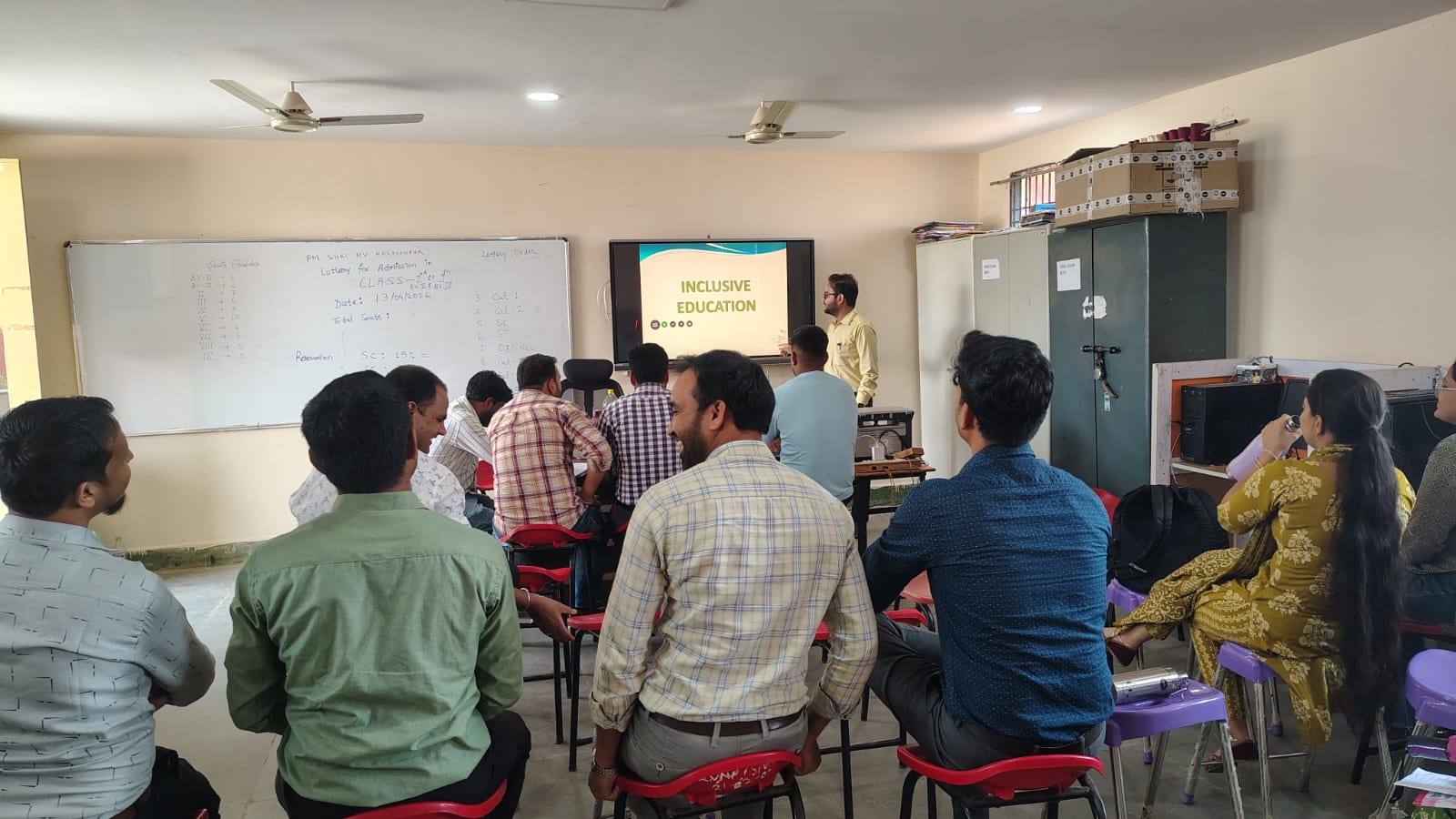
CPD Workshop on Inclusive Education
Topic: Inclusive Education
A Continuous Professional Development (CPD) workshop on the topic “Inclusive Education” was successfully conducted on 23rd April 2026 in the Computer Lab of the Vidyalaya. The session was facilitated by Mr. Kumar Shatkarni, PRT.
Objectives of the Workshop
- To familiarize teachers with the concept and principles of inclusive education.
- To sensitize teachers towards the educational needs of diverse learners, including Children with Special Needs (CwSN).
- To promote equitable and inclusive teaching-learning practices in classrooms.
- To equip teachers with effective strategies for creating supportive and learner-friendly classroom environments.
Highlights of the Session
Mr. Kumar Shatkarni highlighted the importance of inclusive education in ensuring equal learning opportunities for all students irrespective of their socio-economic background, abilities, or learning needs. The session emphasized the vision of the National Education Policy (NEP) 2020 regarding equitable and inclusive education.
The resource person discussed various strategies for addressing diverse learning needs through differentiated instruction, flexible teaching methodologies, classroom accommodations, and the use of appropriate teaching-learning materials. Emphasis was also laid on fostering empathy, acceptance, and respect for diversity within the classroom.
Participation and Interaction
The workshop witnessed active participation from the teaching staff. Participants actively engaged in discussions and shared their experiences related to inclusive classroom practices. Interactive discussions and question-answer sessions made the workshop informative and enriching.
Outcome of the Workshop
- Enhanced understanding of the principles and significance of inclusive education.
- Improved awareness regarding the educational needs of diverse learners and Children with Special Needs (CwSN).
- Strengthened capacity of teachers to adopt inclusive pedagogical practices.
- Encouragement to create supportive, equitable, and learner-friendly classroom environments.
Conclusion
The CPD workshop proved to be highly informative and beneficial for all participants. It reinforced the importance of inclusive education in ensuring equitable access to quality education for all learners and motivated teachers to adopt inclusive practices for the holistic development of students.
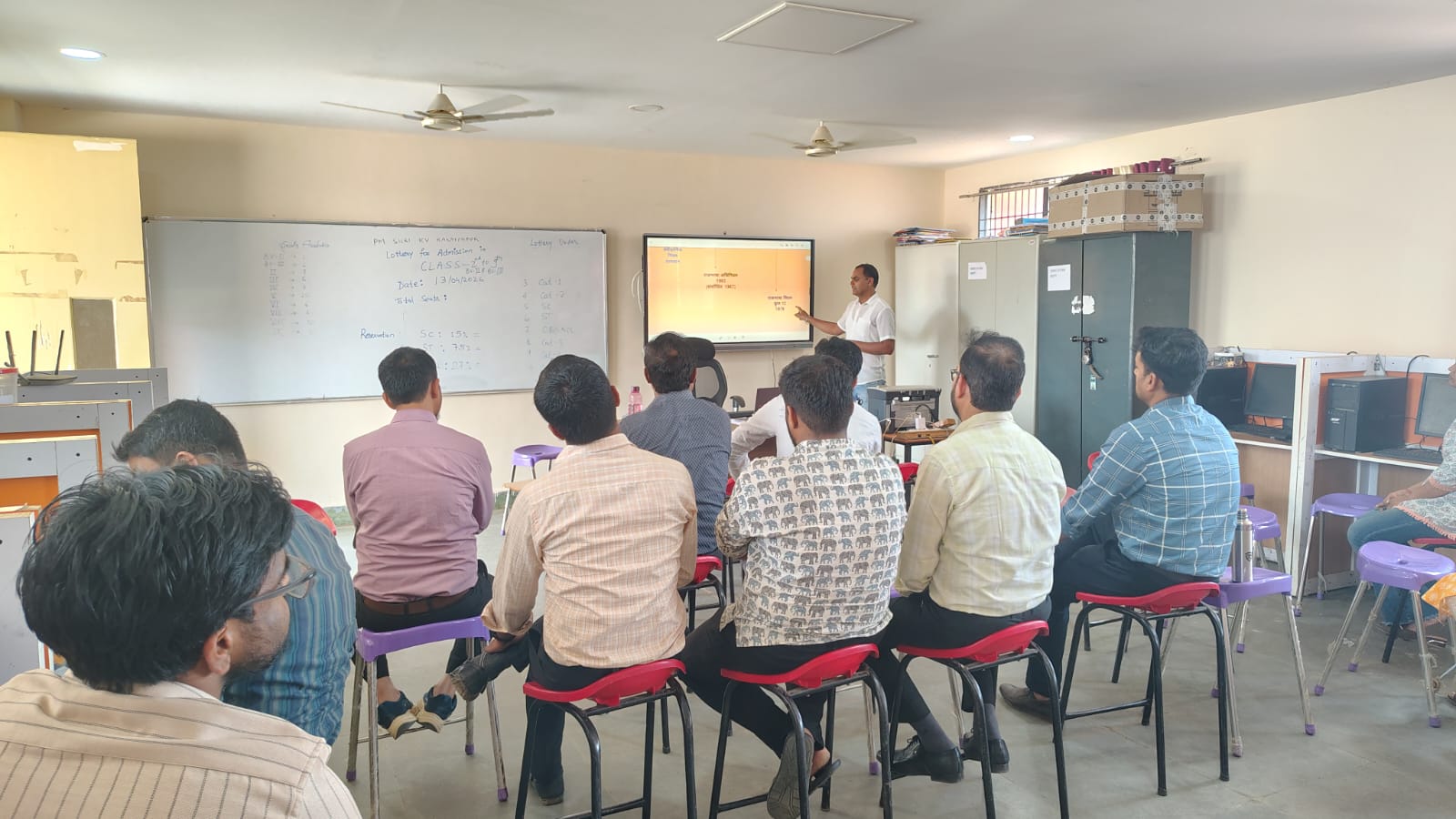
CPD Workshop on Official Language Act (Rajbhasha Adhiniyam)
Topic: Official Language Act (Rajbhasha Adhiniyam)
A Continuous Professional Development (CPD) workshop on the topic “Official Language Act (Rajbhasha Adhiniyam)” was successfully conducted on 22nd April 2026 in the Computer Lab of the Vidyalaya. The session was facilitated by Mr. Manoj Pareek, TGT Sanskrit.
Objectives of the Workshop
- To familiarize teachers and staff members with the provisions of the Official Language Act and related rules.
- To promote the effective use of Hindi in official and administrative work.
- To create awareness regarding the implementation of the Official Language Policy of the Government of India.
- To encourage employees to actively contribute towards the promotion and propagation of Hindi.
Highlights of the Session
Mr. Manoj Pareek elaborated on the salient features of the Official Language Act, 1963 and the constitutional provisions related to the use of Hindi as the Official Language of the Union. He highlighted the importance of promoting Hindi in official correspondence and administrative activities.
The resource person discussed various guidelines and initiatives undertaken by the Government of India for the effective implementation of the Official Language Policy. He emphasized the need for increasing the use of Hindi in official noting, drafting, correspondence, and other administrative functions while ensuring compliance with Government rules.
Participation and Interaction
The workshop witnessed active participation from both teaching and non-teaching staff members. Interactive discussions and question-answer sessions enabled participants to clarify their doubts regarding the implementation of the Official Language Act and its practical applications in day-to-day official work.
Outcome of the Workshop
- Enhanced understanding of the provisions of the Official Language Act and related rules.
- Improved awareness regarding the use of Hindi in official and administrative work.
- Increased motivation among staff members to promote and use Hindi in day-to-day functioning.
- Strengthened commitment towards effective implementation of the Official Language Policy.
Conclusion
The CPD workshop proved to be highly informative and beneficial for all participants. It provided valuable insights into the provisions of the Official Language Act and reinforced the importance of promoting Hindi in official work in accordance with Government policies and guidelines.
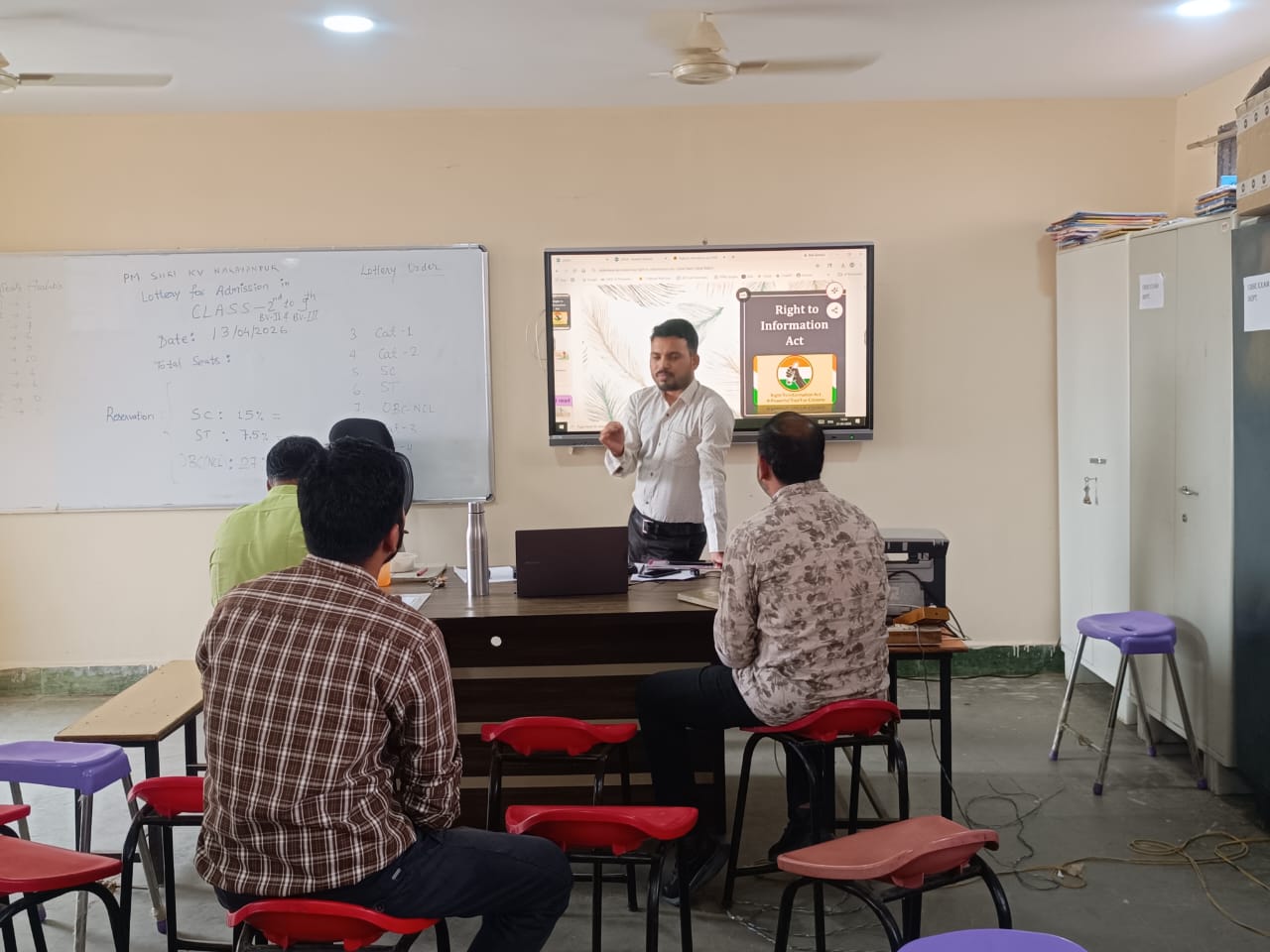
CPD Workshop on Right to Information (RTI) Act
Topic: Right to Information (RTI) Act
A Continuous Professional Development (CPD) workshop on the topic “Right to Information (RTI) Act” was successfully conducted on 21st April 2026 in the Computer Lab of the Vidyalaya. The session was facilitated by Mr. Giriraj Verma, TGT Social Science.
Objectives of the Workshop
- To familiarize staff members with the provisions and significance of the Right to Information (RTI) Act.
- To create awareness regarding the rights and responsibilities of public authorities under the RTI Act.
- To enhance understanding of transparency and accountability in public administration.
- To provide clarity on the procedures for seeking and providing information under the RTI Act.
Highlights of the Session
Mr. Giriraj Verma elaborated on the objectives and salient features of the Right to Information Act, 2005. The session highlighted the importance of transparency, accountability, and citizen participation in strengthening democratic governance and ensuring effective public service delivery.
The resource person discussed various provisions of the Act, including the process of filing RTI applications, the roles and responsibilities of Public Information Officers (PIOs), timelines for providing information, exemptions under the Act, and appellate mechanisms. Emphasis was also laid on the importance of maintaining records and ensuring timely dissemination of information.
Participation and Interaction
The workshop witnessed active participation from both teaching and non-teaching staff members. Participants engaged in interactive discussions and sought clarification on practical aspects related to RTI applications, exemptions, and institutional responsibilities under the Act.
Outcome of the Workshop
- Enhanced understanding of the provisions and significance of the RTI Act.
- Improved awareness regarding transparency and accountability in public institutions.
- Increased clarity on procedures for seeking and providing information under the Act.
- Encouragement to uphold the principles of openness and responsible governance.
Conclusion
The CPD workshop proved to be highly informative and beneficial for all participants. It provided valuable insights into the provisions of the Right to Information Act and reinforced the importance of transparency, accountability, and effective record management in educational institutions.
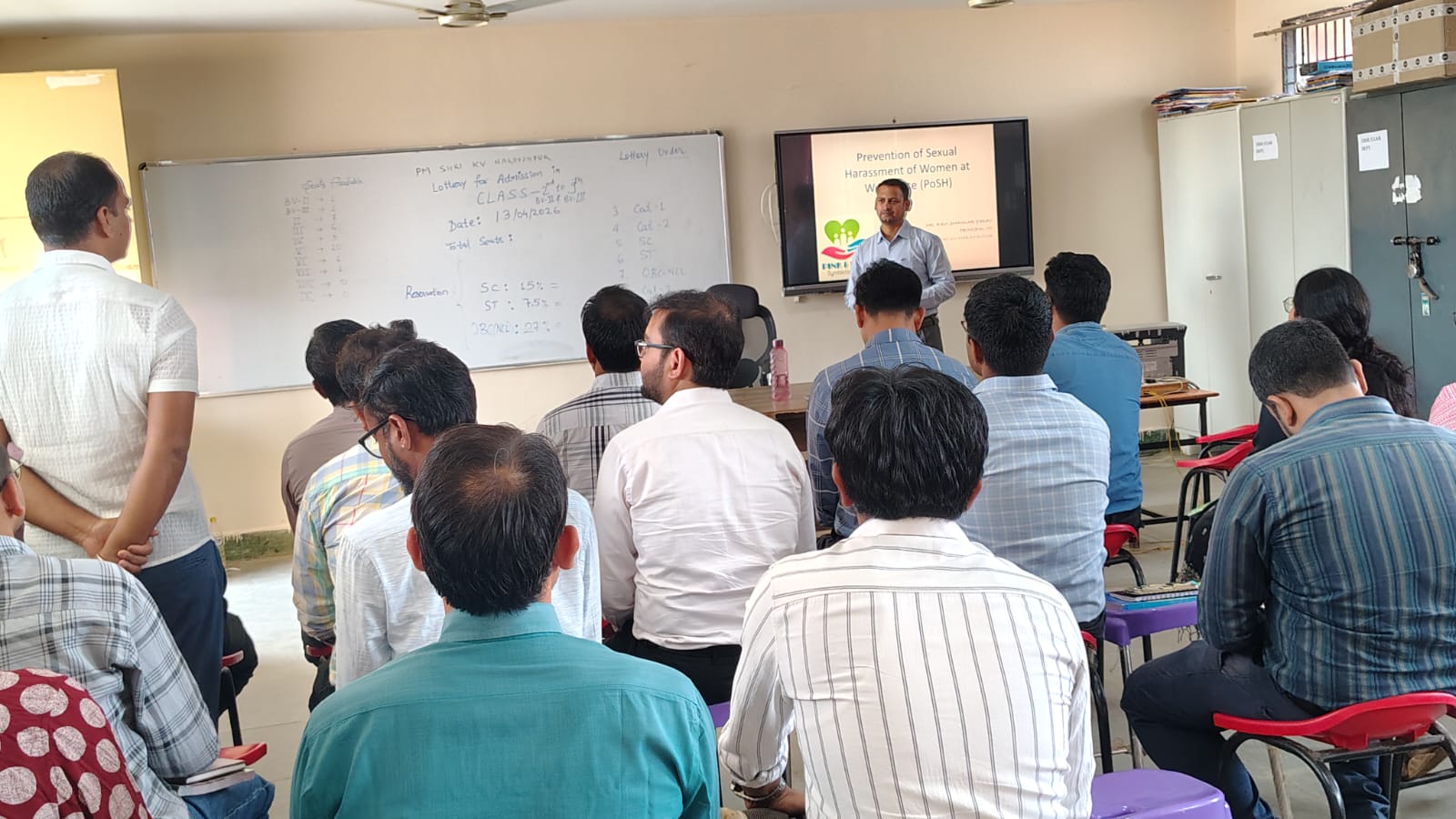
Training Programme on Protection of Children from Sexual Offences (POCSO) Act and Prevention of Sexual Harassment (POSH)
Date: 20 April 2026
Resource Person: Mr. Ravi Shankar Yadav, Principal I/C
A training programme on the topic “Protection of Children from Sexual Offences (POCSO) Act and Prevention of Sexual Harassment (POSH)” was successfully conducted on 20 April 2026 at PM SHRI KV Narayanpur. The session was facilitated by Mr. Ravi Shankar Yadav, Principal I/C.
Objectives of the Training
- To create awareness among staff members regarding child protection laws.
- To familiarize employees with the provisions of the POCSO Act.
- To sensitize staff members about workplace ethics and POSH guidelines.
- To promote a safe, secure, and inclusive environment for students and employees.
Highlights of the Session
Mr. Ravi Shankar Yadav elaborated on the key provisions of the POCSO Act, emphasizing the rights of children, mandatory reporting procedures, and the responsibilities of teachers and staff in safeguarding children from abuse and exploitation.
The session also covered various provisions of the Prevention of Sexual Harassment (POSH) Act, focusing on workplace ethics, professional conduct, complaint redressal mechanisms, and the role of the Internal Committee in addressing grievances related to sexual harassment.
Participation and Interaction
The programme witnessed active participation from all staff members. Interactive discussions and question-answer sessions enabled participants to clarify their doubts and gain a better understanding of legal provisions and institutional responsibilities.
Outcome of the Training
- Enhanced awareness regarding child protection and workplace safety.
- Improved understanding of legal responsibilities under POCSO and POSH Acts.
- Strengthened commitment towards creating a safe and supportive school environment.
- Increased awareness regarding reporting mechanisms and grievance redressal procedures.
Conclusion
The training programme proved to be highly informative and beneficial for all participants. It reinforced the institution’s commitment towards ensuring the safety, dignity, and well-being of both students and staff members and highlighted the importance of maintaining a secure and inclusive educational environment.
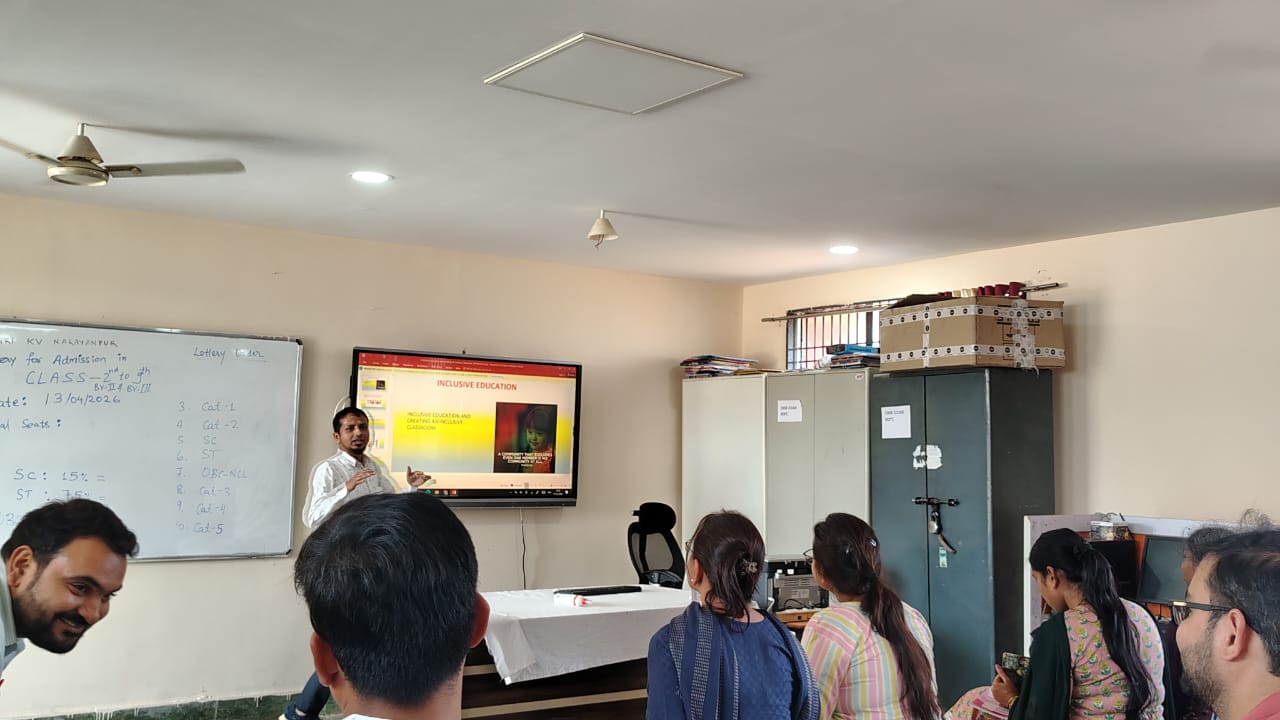
CPD Workshop on Inclusive Education and Creating an Inclusive Classroom
Topic: Inclusive Education and Creating an Inclusive Classroom
A Continuous Professional Development (CPD) workshop on the topic “Inclusive Education and Creating an Inclusive Classroom” was successfully conducted on 17th April 2026 in the Computer Lab of the Vidyalaya. The session was facilitated by Mr. Muzaffaruddin, PRT.
Objectives of the Workshop
- To sensitize teachers towards the principles and importance of inclusive education.
- To develop an understanding of strategies for creating inclusive classrooms.
- To promote equitable learning opportunities for all students, including Children with Special Needs (CwSN).
- To equip teachers with effective pedagogical practices for addressing diverse learning needs.
Highlights of the Session
Mr. Muzaffaruddin elaborated on the concept and significance of inclusive education in the context of the National Education Policy (NEP) 2020. The session emphasized the need to provide equal learning opportunities to every child irrespective of their abilities, backgrounds, or learning needs.
The resource person discussed various strategies for creating an inclusive classroom environment, including differentiated instruction, flexible teaching methods, use of assistive technologies, and adaptation of teaching-learning materials. The importance of empathy, sensitivity, and positive classroom culture in supporting diverse learners was also highlighted.
Participation and Interaction
The workshop witnessed active participation from the teaching staff. Interactive discussions and experience-sharing sessions enabled participants to deliberate on challenges and best practices related to inclusive education. Teachers actively engaged in discussions on creating supportive and barrier-free learning environments.
Outcome of the Workshop
- Enhanced understanding of the principles and practices of inclusive education.
- Improved awareness regarding the needs of diverse learners and Children with Special Needs (CwSN).
- Strengthened capacity of teachers to adopt inclusive pedagogical strategies.
- Encouragement to create supportive, equitable, and learner-friendly classroom environments.
Conclusion
The CPD workshop proved to be highly informative and beneficial for all participants. It reinforced the importance of inclusive education in ensuring equitable access to quality education for all learners and motivated teachers to adopt inclusive practices in their classrooms.
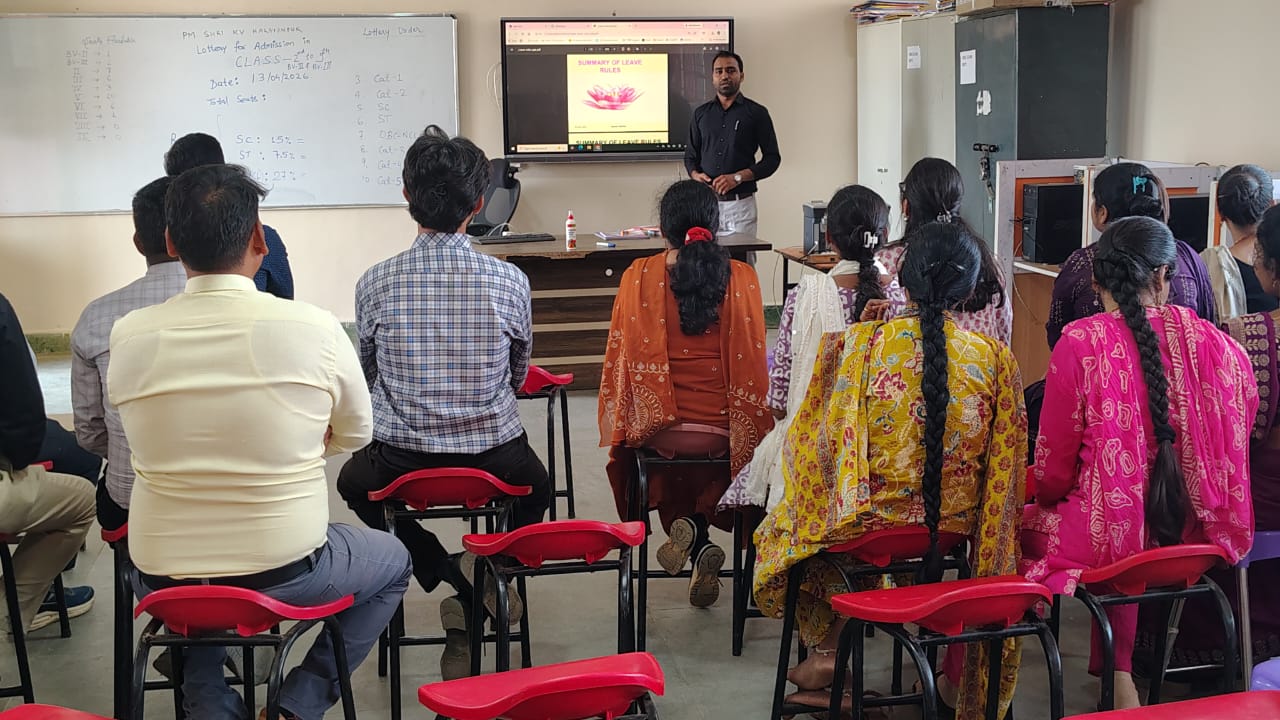
CPD Workshop on Leave Rules
Topic: Leave Rules
A Continuous Professional Development (CPD) workshop on the topic “Leave Rules” was successfully conducted on 18th April 2026 in the Computer Lab of the Vidyalaya. The session was facilitated by Mr. Ajay Kumar Meena, PRT.
Objectives of the Workshop
- To familiarize staff members with various types of leave admissible to Central Government employees.
- To create awareness regarding eligibility criteria, procedures, and conditions for availing different kinds of leave.
- To provide clarity on leave application procedures and related documentation.
- To ensure proper understanding and compliance with Government leave rules and regulations.
Highlights of the Session
Mr. Ajay Kumar Meena elaborated on the various leave provisions applicable to Central Government employees, including Casual Leave (CL), Earned Leave (EL), Half Pay Leave (HPL), Child Care Leave (CCL), Maternity Leave, Paternity Leave, Commuted Leave, Extraordinary Leave (EOL), and other special leave provisions.
The resource person explained the eligibility conditions, accumulation and encashment provisions, leave sanctioning authorities, and procedures for applying for different categories of leave. Emphasis was also laid on maintaining proper records, timely submission of leave applications, and adherence to Government rules while availing leave facilities.
Participation and Interaction
The workshop witnessed active participation from both teaching and non-teaching staff members. Participants raised various queries related to leave eligibility, accumulation, and sanction procedures. The interactive discussion provided clarity on several practical aspects related to leave management.
Outcome of the Workshop
- Enhanced understanding of various categories of leave and their admissibility.
- Improved awareness regarding leave procedures and documentation requirements.
- Increased clarity on eligibility conditions and leave-related provisions.
- Encouragement to follow Government norms and procedures while availing leave facilities.
Conclusion
The CPD workshop proved to be highly informative and beneficial for all participants. It provided valuable insights into the Leave Rules applicable to Central Government employees and enabled staff members to better understand the procedures and provisions governing various types of leave.
CPD Workshop on Preparation of NEP 2020 Competency-Based Lesson Plan
Topic: Preparation of NEP 2020 Competency-Based Lesson Plan
A Continuous Professional Development (CPD) workshop on the topic “Preparation of NEP 2020 Competency-Based Lesson Plan” was successfully conducted on 16th April 2026 in the Computer Lab of the Vidyalaya. The session was facilitated by Mr. Pawan Kumar, PRT.
Objectives of the Workshop
- To familiarize teachers with the concept and importance of competency-based education as envisaged in NEP 2020.
- To develop an understanding of the components of a competency-based lesson plan.
- To equip teachers with strategies for designing learner-centric and outcome-oriented lesson plans.
- To promote the integration of experiential, activity-based, and competency-focused pedagogies in classroom teaching.
Highlights of the Session
Mr. Pawan Kumar elaborated on the key principles of competency-based education and emphasized the paradigm shift from content-based teaching to outcome-based learning as envisioned in the National Education Policy (NEP) 2020. The session highlighted the significance of focusing on learning outcomes, competencies, and student engagement during lesson planning.
The resource person demonstrated the process of preparing competency-based lesson plans by incorporating learning objectives, experiential activities, formative assessments, and reflective practices. Teachers were also introduced to various pedagogical approaches, including inquiry-based learning, collaborative learning, and experiential learning strategies.
Participation and Interaction
The workshop witnessed enthusiastic participation from the teaching staff. Participants actively engaged in discussions and practical exercises related to the preparation of competency-based lesson plans. Teachers shared their experiences and explored innovative approaches for making classroom teaching more interactive and effective.
Outcome of the Workshop
- Enhanced understanding of competency-based education and its relevance in NEP 2020.
- Improved capacity of teachers to design competency-based lesson plans.
- Increased awareness regarding learner-centric and experiential teaching methodologies.
- Encouragement to adopt innovative pedagogical practices for improving student learning outcomes.
Conclusion
The CPD workshop proved to be highly informative and beneficial for all participants. It provided valuable insights into the preparation of competency-based lesson plans and reinforced the importance of adopting outcome-oriented and learner-centric approaches in classroom teaching in alignment with the vision of NEP 2020.